

Gym Equipment Member Retention
Gym Equipment and Member Retention: How Hardware Affects Renewals
Members usually cancel because their routine is disrupted, not because they suddenly stop wanting to train. Equipment downtime, chronic crowding, and poor fit can accumulate until a member cancels. Equipment quality, variety, and layout are controllable retention factors.
Equipment Quality: Downtime Increases Cancellation Risk
Industry data indicates that roughly two-thirds of gym members quit within the first year, and a broken-machine experience in the first 90 days raises that risk. If a member’s primary machine is out of service twice in the first month, they have a reason to leave.
Specifications matter. Cables, bushings, pad density, and frame gauge determine whether a machine survives 4,000+ monthly uses or becomes unstable within six months. Commercial-grade units cost more upfront but less over a five-year cycle. Common problems include budget selectorized machines with cable slack, benches with foam that flattens, and plate-loaded units with poor leverage ratios.
Frequently used basics such as the XVD-021 Utility Bench and ST009 Lower Back are not glamorous, but they are used constantly. When they remain durable, members rarely notice them.

Equipment Variety: Serve Different Member Segments
Retention is often a segmentation issue. A 24-year-old powerlifter, a 45-year-old with a shoulder injury, and a beginner intimidated by free weights all pay the same membership. If the floor serves only one group, the others may leave.
Three groups should be covered:
Free-weight athletes: racks, platforms, quality bars, and plates
Machine-based members: guided, low-risk movements that still progress
Beginners and rehab-adjacent members: assisted and supported variations
Assisted equipment is an underrated retention tool. The LT-008 Assisted Chin/Dip allows a member who cannot perform a single bodyweight repetition to train pull-ups.

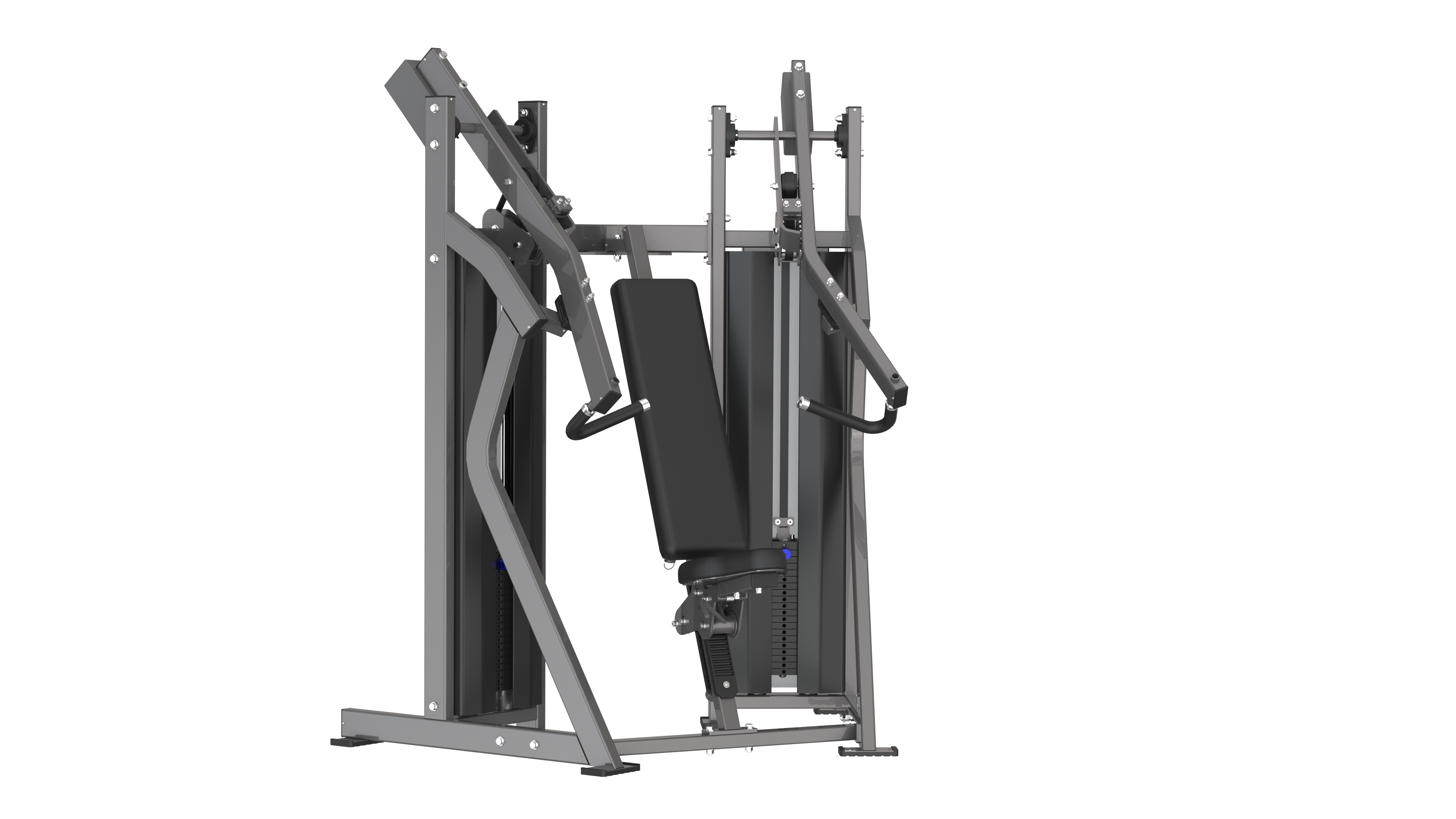
Plate-loaded and iso-lateral equipment adds variety without adding complexity. The NHM16 Iso-Lateral High Row and MTS001A Iso-Lateral Chest Press let experienced lifters train unilaterally while beginners remain safe. Cable and functional stations such as theZH005 Functional Trainer cover a large range of exercises per square meter.
Layout: A Silent Driver of Churn
Poor flow creates congestion, and congestion creates frustration. A member who waits 12 minutes for a lat pulldown at 6 p.m. may start coming at 5 a.m. or stop coming.
Layout rules that reduce churn:
Separate zones by energy: cardio away from heavy lifting noise and dropped plates
Duplicate high-demand pieces
Create a beginner-friendly corner with machines grouped together
Leave at least 1.2 m between machine rows for wheelchair access and foot traffic
Grouping selectorized strength in one visible, approachable zone shortens the learning curve for new members and makes pieces such as the XT-07 Pull Down and BLT-1314 Leg Extension/Leg Curl easy to find. Assisted stations work best near the free-weight area, helping members transition from machines to racks.

The Bottom Line
Retention is the cheapest growth available. Acquiring a new member costs far more than keeping an existing one. Equipment quality, variety, and layout determine whether the floor feels like a place members belong or a place they tolerate. Specify equipment for the member the club wants to keep, not only the member it already has. That is how churn drops.