

Total Cost Of Ownership Commercial Gym Equipment Maintenance
**Total Cost of Ownership: What Commercial Gym Equipment Really Costs**
Every gym owner knows the sticker price, but fewer track the cost after installation. The gap between purchase price and lifetime cost is where budgets quietly erode. TCO should be modeled before any refit.
**Four Cost Buckets**
TCO covers acquisition, maintenance, downtime, and resale. Most buyers consider only acquisition.
1. **Acquisition** — Purchase price, freight, customs, and installation. Ex-factory sourcing reduces middleman markup, but container shipping and rigging labor must be included.
2. **Maintenance and Parts** — Commercial cardio equipment can run 12–16 hours a day. Belts, decks, cables, and bearings wear predictably. A well-built selectorized machine may need 1–2 cable or pulley replacements per unit annually. Thin-gauge steel frames often require more frequent guide rod and bushing replacement.
3. **Downtime** — A failed lat pulldown during peak hours affects member satisfaction and retention. If overseas parts take three weeks to arrive with no local stock, the lost revenue is real.
4. **Resale and Refurbishment** — Quality plate-loaded and selectorized steel holds value. Off-brand imports with proprietary fittings generally do not. Resale value matters during rebranding or floor rotation.
**Hidden Costs of Cheap Equipment**
Low-cost equipment may look favorable on a spreadsheet but carries hidden costs:
- Thin-gauge frames flex under load; weld fatigue can appear in 18–24 months.
- Proprietary hardware can turn a $40 pulley into a $200 import order with six weeks of waiting.
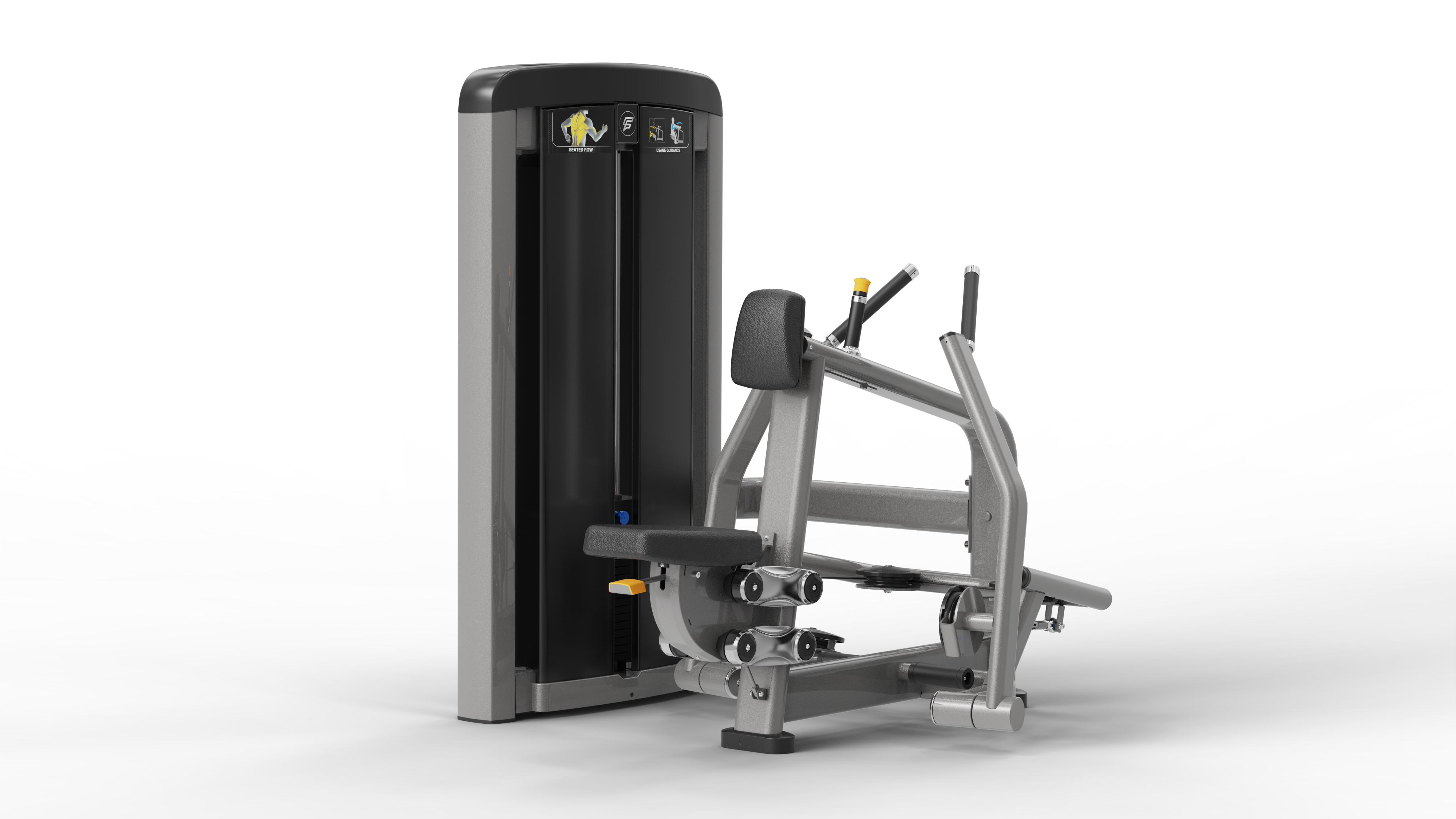
- Cheap vinyl can crack at seams within a year on high-traffic pieces such as **SF90 004 SEATED ROW**.
- Weight stack rattle and cable stretch require frequent adjustment calls.
A machine costing 30% less but requiring twice the service visits and failing two years sooner often loses on five-year TCO.
**Payback Periods**
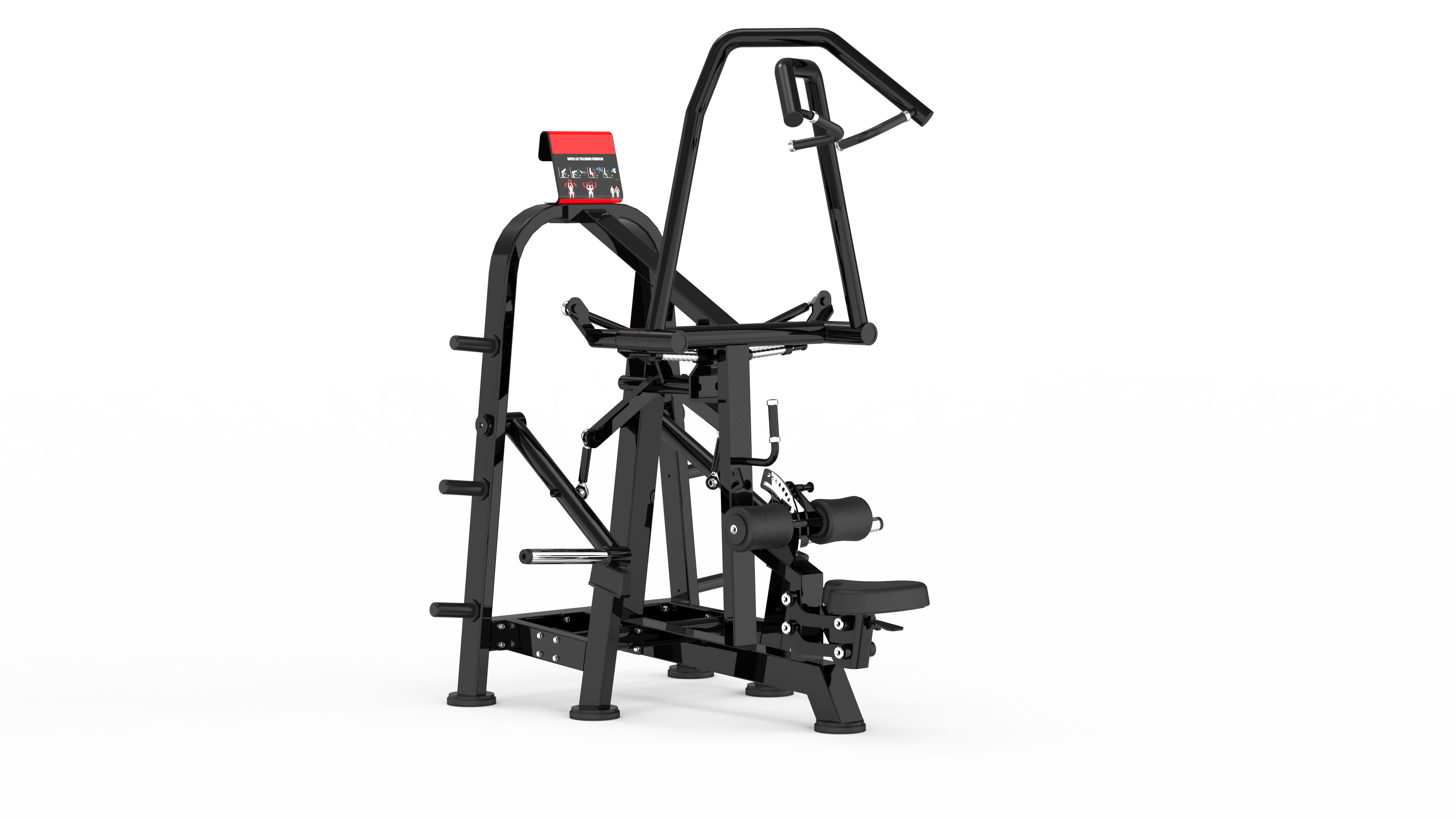
Strength equipment typically pays back in 18–36 months, depending on utilization and membership pricing. High-traffic pieces such as **PT012B SUPER LAT PULLDOWN CIRCULAR** and **TH005 CABLE CROSSOVER** can pay back faster due to member demand. Low-utilization specialty machines may extend to 48 months; this does not make them poor choices, but floor mix should match member profile.
**What Drives Payback**
- Utilization rate: daily user traffic per machine
- Retention lift from new equipment, often the largest ROI factor
- Downstream revenue from personal training attached to new stations
**Long-Term Value: Buy Once, Maintain Forever**
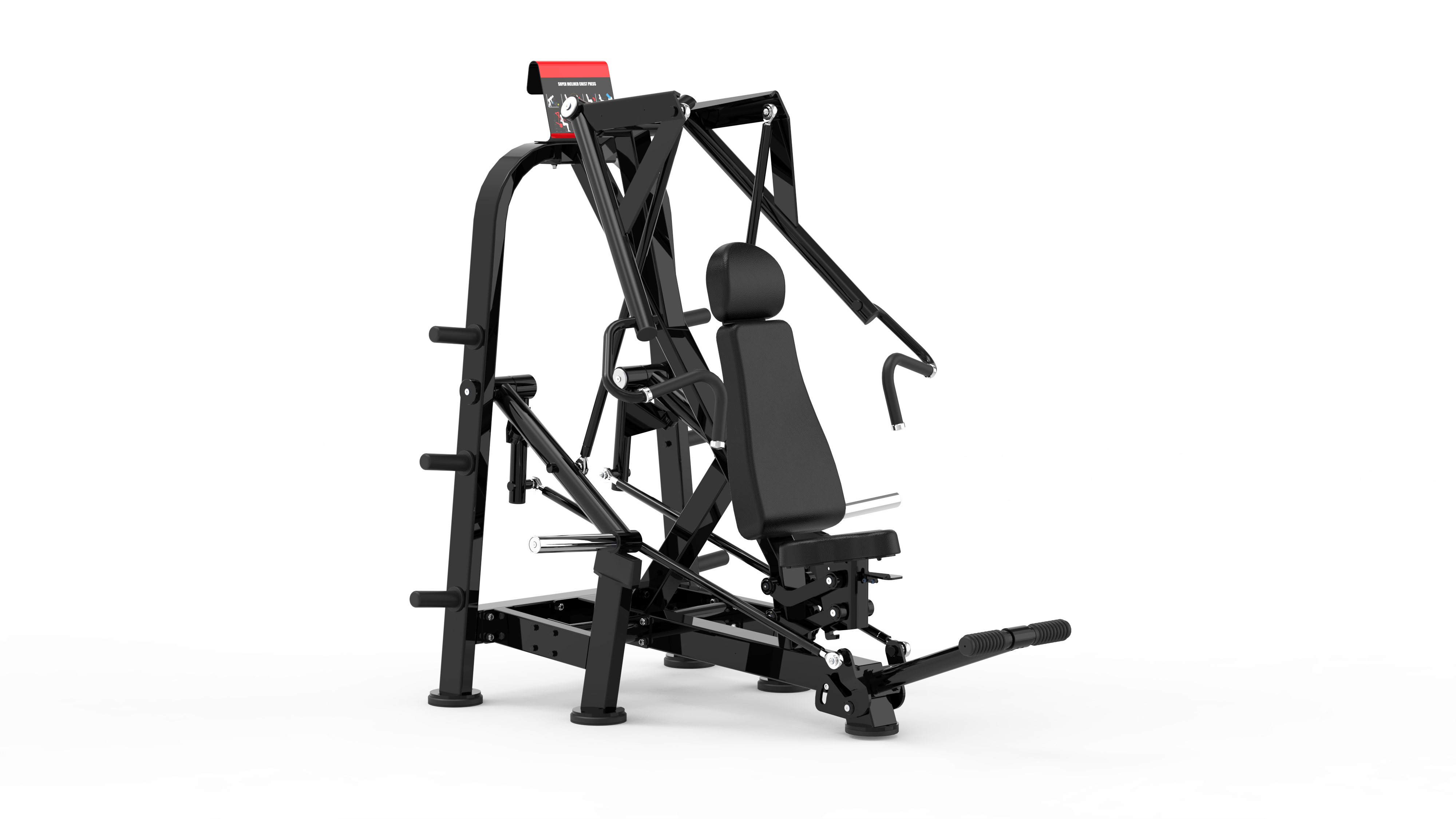
Commercial-grade Chinese manufacturing has narrowed much of the quality gap. Good factories specify 3mm+ steel, quality bearings, and consistent powder coating. **PT003A SUPER INCLINED CHEST PRESS** and **SF90 003A DELTS MACHINE** are built for heavy use if cables and pads are maintained.
A service schedule—quarterly inspection, cable tension checks, and upholstery cleaning—helps distinguish a 7-year machine from a 15-year machine.
**Financing Options**
- **Equipment leasing** — Preserves cash flow, provides predictable monthly cost, and often allows upgrade at term end.
- **Equipment financing loans** — The buyer owns the asset; better for 10+ year holding periods.
- **Manufacturer terms** — Some ex-factory suppliers offer staged payment on larger container orders.
- **Refurb-and-reinvest cycles** — Rotate 20% of the floor annually instead of a full replacement.
Financing shifts cost from capex to opex, which matters when scaling locations. Evaluate total interest, not only the monthly payment.
**Bottom Line**
TCO is a discipline, not a single number. Specify quality steel, buy from a supplier with real after-sales support, and plan maintenance before equipment arrives. The cheapest machine on the invoice is rarely the cheapest machine on the floor.